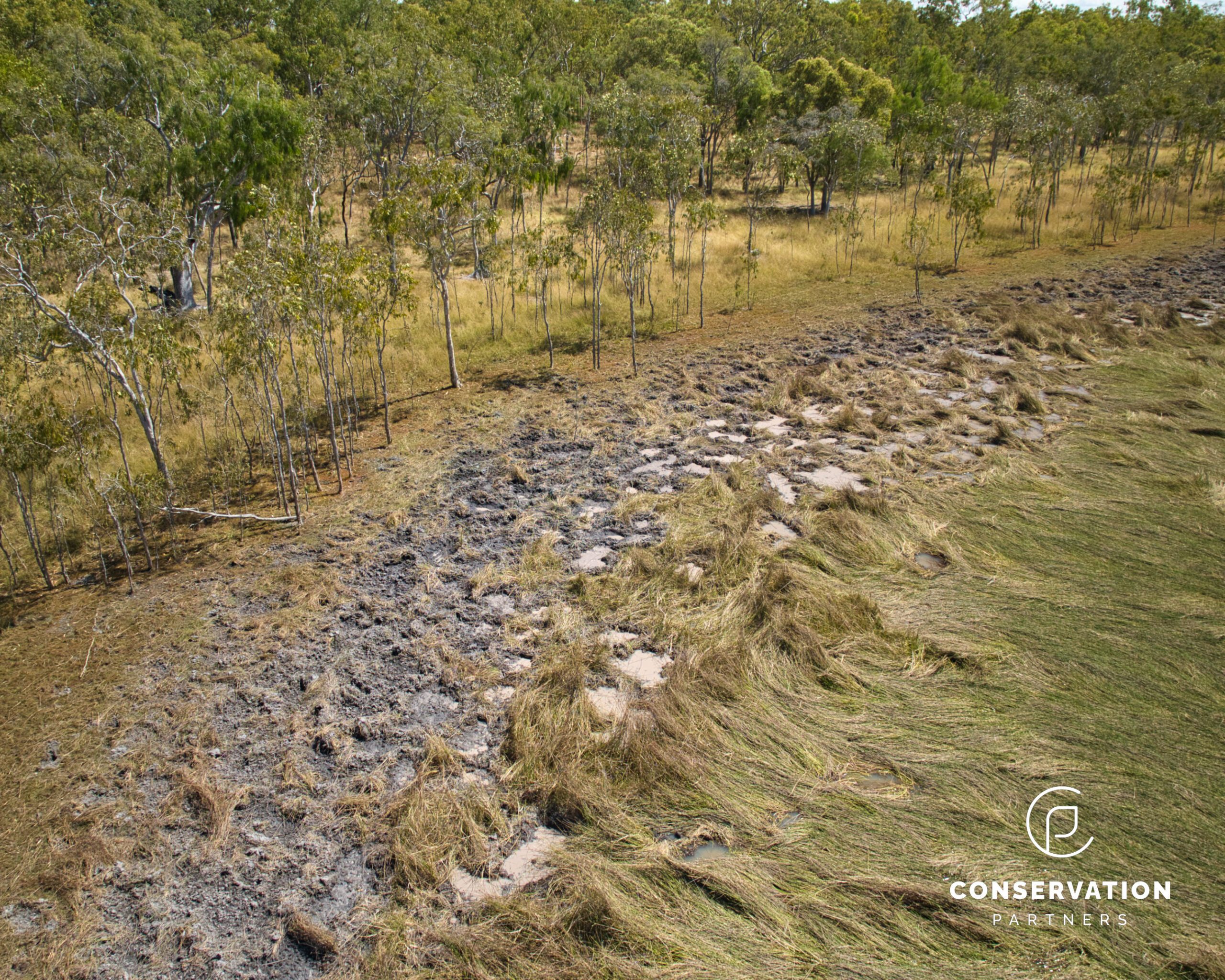
From polluted waterways to trampled wetlands, feral pigs are wreaking havoc on Cape York’s unique ecosystems. Photo Credit - Braydon Moloney
FERAL PIGS ON CAPE YORK
Feral pigs are one of the most destructive invasive species in Australia. This is no exception on Cape York Peninsula. Intelligent, adaptable and prolific breeders, they cause widespread damage to wetlands, grasslands and waterways, threatening not only pastoral livelihoods, but some of Australia’s most endangered wildlife.
At Conservation Partners, feral pig control is a critical part of our conservation work, particularly where pig damage directly undermines efforts to protect threatened species such as the Golden-shouldered Parrot.
The Boar War. Curated by Braydon Moloney.
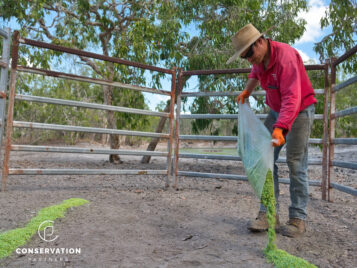
Caption: Left - Dr Patrick Webster dispenses poisoned corn in the Artemis Antbed Nature Refuge, for controlling feral pigs. Following a week of pre-feeding on ordinary corn (inside a cattle-proof feeding station and monitored by camera), the pigs have become accepting of the new food source and willing to eat enough of the poisoned grain to receive a lethal dose. Photo Credit - Braydon Moloney.
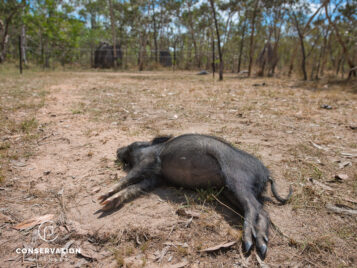
Caption: Right – Dead pig following the consumption of poisoned feed. Photo Credit - Braydon Moloney.
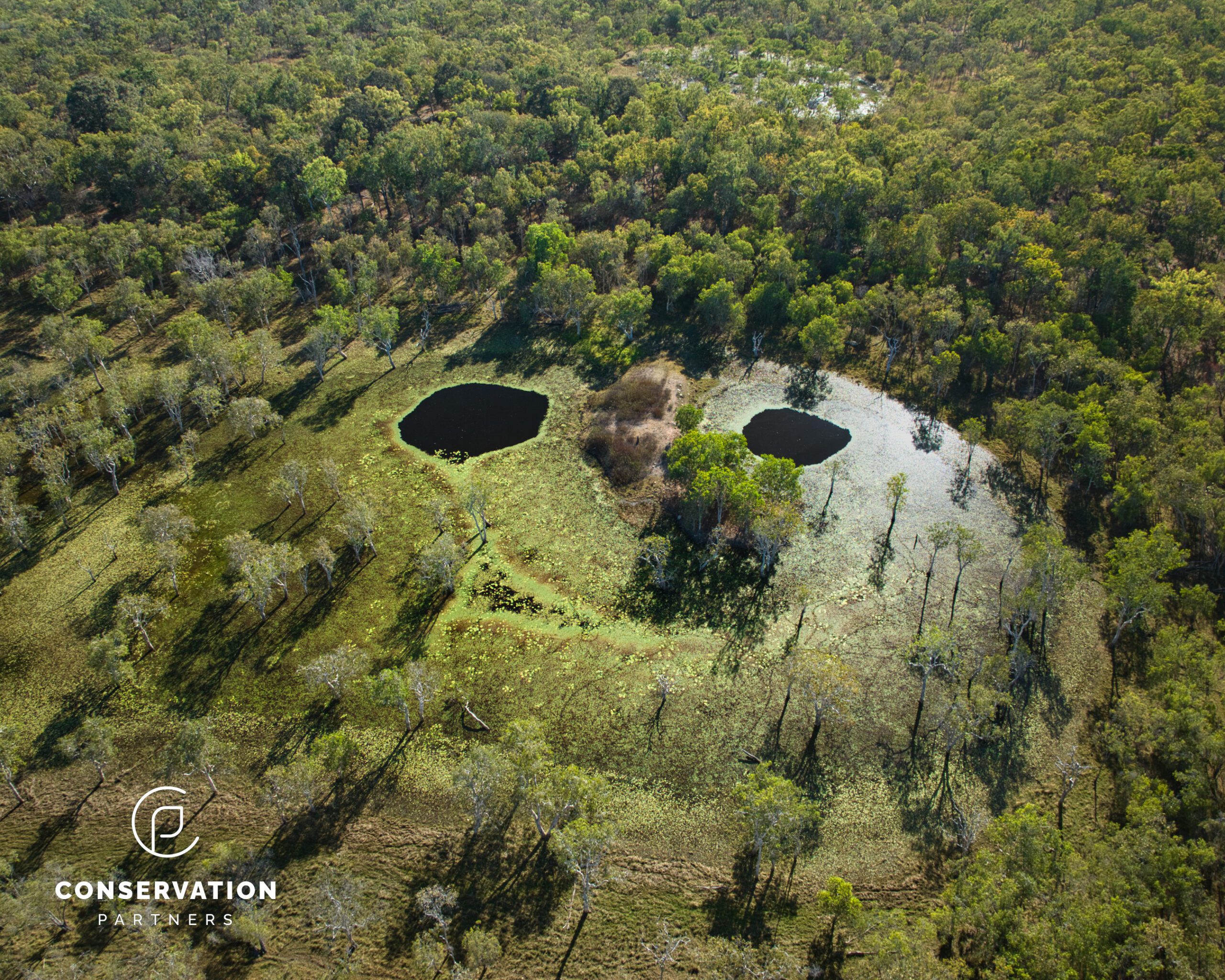
Turtle Swamp putting on a happy face. This special swamp holds water all year round, making it an important refuge for wildlife in the late dry season, as well as a crucial watering point for the Shephard's cattle. Because of its proximity to the homestead, it receives continual, sustained control efforts for feral pigs, and the results speak for themselves: a healthy, intact wetland system without feral pig damage. Photo Credit - Braydon Moloney.
WHY ARE FERAL PIGS SUCH A PROBLEM?
Feral pigs root, dig and wallow across large areas of the landscape. Just one boar can tear up a wetland in a single night, muddying water, destroying vegetation and destabilising fragile soils.
On Cape York, the problem is magnified:
- Pig densities can reach up to 20 pigs per square kilometre
- A single sow can produce more than 20 piglets per year
- Pigs have few natural predators
- Populations rebound rapidly if control pressure drops
As Artemis Station grazier Tom Shephard puts it: “You keep them down but you’ll never get them out. The moment you take the pressure off, they’re back again.”
IMPACT ON GOLDEN-SHOULDERED PARROTS
The damage caused by feral pigs goes far beyond visible destruction. Pigs have an insatiable appetite for cockatoo grass tubers, which they dig up before the grass can flower and set seed. Those seeds are a critical food source for Golden-shouldered Parrots at the very start of the wet season when no other seed is available.
Pigs also
- Topple termite mounds that parrots rely on for nesting
- Destroy wetlands that support insects and plant life
- Degrade habitat for countless native species
WHY PIG CONTROL IS NEVER “ONE AND DONE”
Feral pigs are smart. Suspicious. And incredibly resilient. They learn quickly, avoid threats, and breed faster when numbers are reduced. Control efforts that are sporadic or poorly targeted simply don’t work.
Effective pig management requiress
- Constant pressure
- Strategic timing
- Multiple control methods
- Coordination across properties
This is not something landholders can tackle alone.
HOW WE CONTROL FERAL PIGS AT ARTEMIS
Conservation Partners works in close partnership with the Shephard family to reduce pig impacts where they matter most. Our integrated approach includes:
Targeted Baiting:
- At the end of the dry season, pigs are forced to congregate around remaining water sources, their Achilles heel. We pre-feed pigs with non-toxic bait to build trust, use monitoring cameras to confirm pig-only access, deploy poison bait only when conditions are optimal and ensure outcomes to ensure effectiveness.
- 1080 is used as part of a carefully managed feral pig control program under strict legal requirements, permit conditions, and best-practice guidelines. This work is not undertaken lightly. All baiting programs are conducted under strict controls designed to minimise risks to non-target species and domestic animals.
- While no one likes using poison, in remote landscapes it remains the least-worst option. Doing nothing allows far greater suffering and ongoing ecological collapse.
Aerial and Ground Shooting:
- With support from Cape York NRM, aerial shooting over the previous two wet seasons has provided a rapid knock-down of pig numbers in open country. This is combined with ground shooting and night shooting using thermal optics.
No single method works on its own. Together, they make a measurable difference.
WHAT SUCCESS LOOKS LIKE
Success doesn’t mean eradicating pigs entirely, that’s not realistic. Success means protecting key wetlands, giving cockatoo grass a chance to seed, preserving nesting habitat and buying time for endangered species to recover Camera footage, field surveys and habitat recovery show that pig pressure can be reduced, and that ecosystems respond when given a chance.
A REGION-WIDE CHALLENGE
Feral pigs don’t respect boundaries. Even the most intensive control program will fail if neighbouring properties aren’t involved. That’s why Conservation Partners supports a coordinated, region-wide approach across land tenures. This is a challenge that needs continual funding, and a strategic response across the whole landscape.
WHY THIS WORK MATTERS
Pig control is not glamorous. It’s hard, ongoing, and often confronting. But it is essential. By supporting this work, you are helping protect some of Australia’s most vulnerable ecosystems and ensuring that conservation gains made today are not undone tomorrow.

OUR PARTNERS








OUR FORMER PARTNERS