Buff-breasted Button-Quail illustration from 1922. There are no photos of the BBBQ in existence.
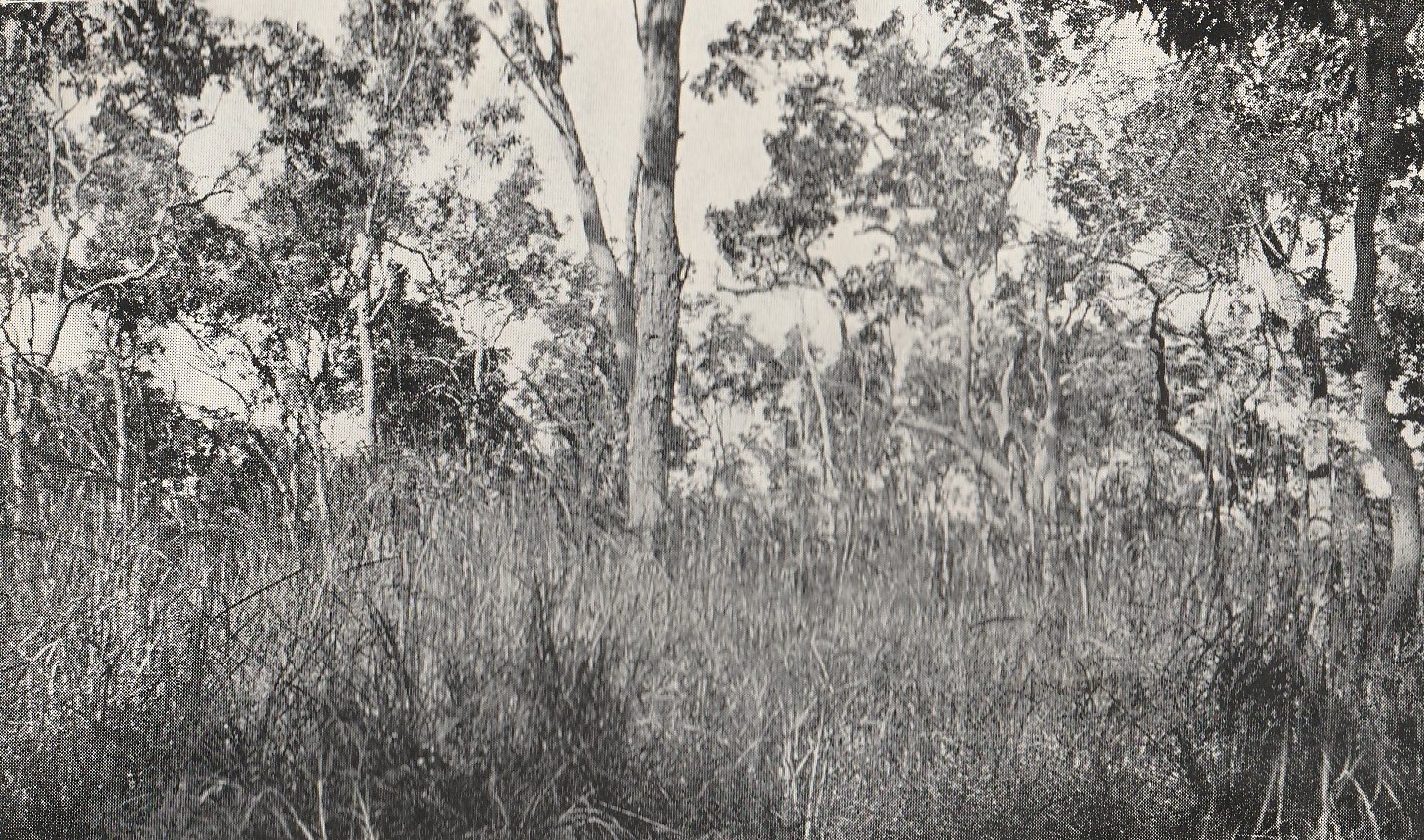
A photo of Buff-breasted Button-quail habitat near Coen, circa 1922. Across Cape York, these habitats have become thick with midstory trees and the perennial grasses have largely disappeared. These factors may explain why BBBQ have become undetectable in their former range. Photo W.McLennan, Courtesy Queensland Museum Network Collection.
THE BUFF-BREASTED BUTTON-QUAIL
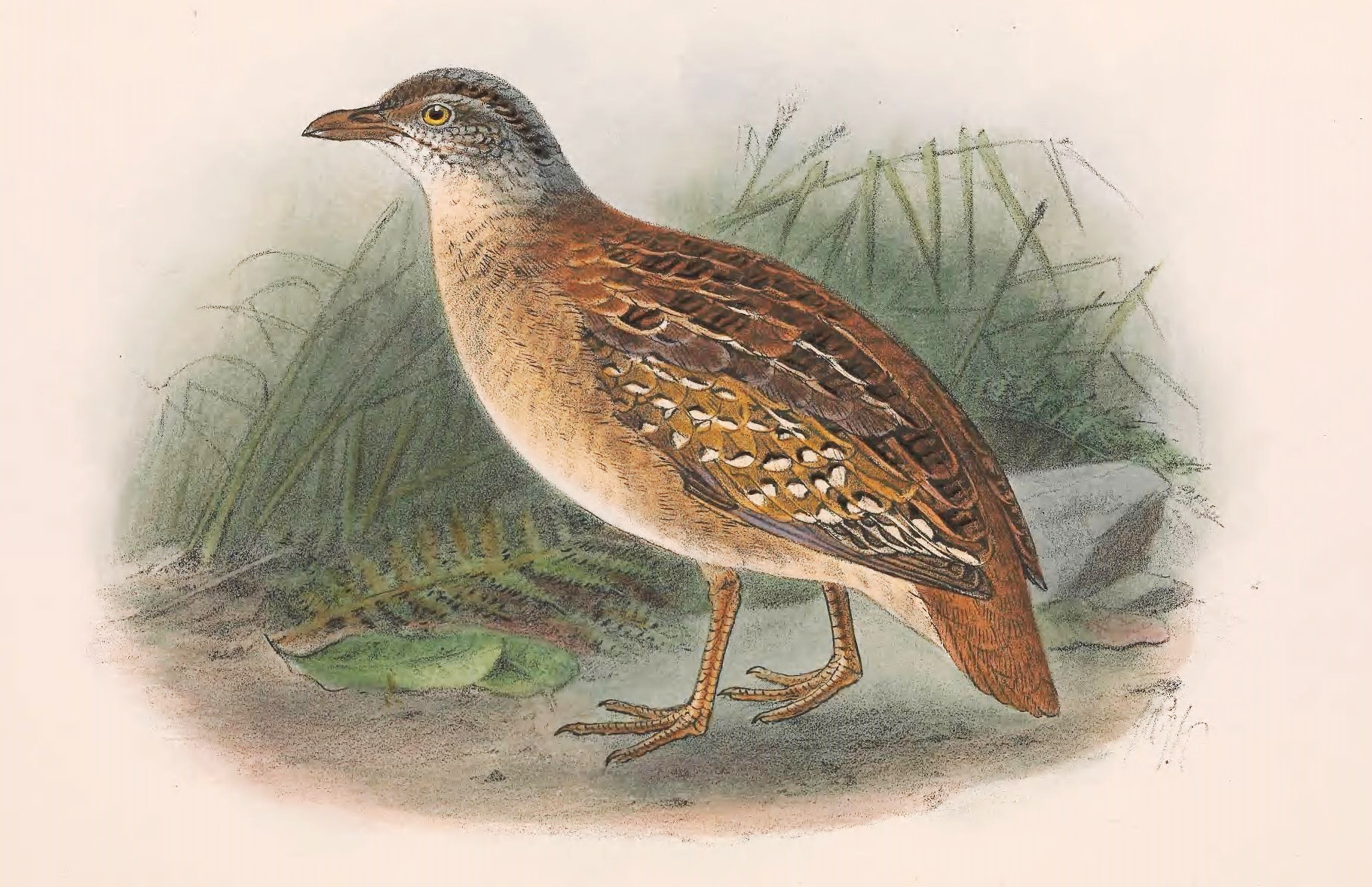
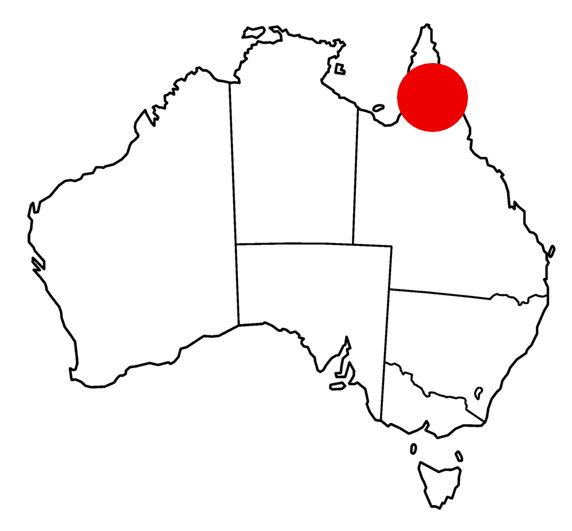
The Buff-breasted Button-quail (BBBQ) could be already extinct. If it's not, it's likely to exist only in remote parts of Cape York Peninsula. Conservation Partners is collaborating with First Nations people, BirdLife Australia, Research and Recovery of Endangered Species (UQ) and Cape York NRM to find it.
MISTAKEN IDENTITY
For decades, bird watchers and conservation scientists had rest assured that a population of the Buff-breasted Button-quail (BBBQ) occurred across the northern region of the Atherton Tablelands in north Queensland.
However, new evidence strongly suggests that birds in this region were actually being confused with the more common Painted Button-quail. This realisation meant the BBBQ had not been definitively seen for a century. Indeed, it has probably never occurred near the Atherton Tablelands.
One indisputable fact is that there has been no tangible evidence produced of the existence of BBBQ for over 100 years. No photograph or video, no feather, no egg, no road killed bird, no recording of its call - NOTHING. The last confirmed records of BBBQ were skins and eggs collected near Coen on Cape York Peninsula in the early 1920s.
The renewed perspective on BBBQ has lead to the species being uplisted on the government register as Critically Endangered.
CHANGE FOR THE WORSE
BBBQ are elusive birds of Cape York's tropical savannas. Photos captured in the 1920s show that the Coen sites where it definitely occurred were open stringy bark forests with an understory of perennial grasses. Recent visits to these same places has revealed that they are now thick with mid-story trees and most of the perennial grasses have gone. It's thought that grazing pressure and changed fire patterns have driven this change, and it is assumed that this is why BBBQ have now disappeared from these locations.
Habitat change like what has happened near Coen is also affecting other Cape York species, such as the Golden-shouldered Parrot, which is the focus of our work on Artemis. At least with the parrots we know where they occur and are confident about the drivers of population decline. This has allowed us to implement the right conservation actions exactly where they're needed most. However for BBBQ, we don't know exactly what the threatening processes are, and worse still, we don't even know the location of a single population. That's right, no-one - anywhere - can go out and find a single BBBQ, and we haven't been able to do this for 100 years.
A CALL TO ARMS
The uncertainty about BBBQ means we simply don't know where to start when it comes to its conservation. In order to protect it, we must first find a population. Once a population is found we can understand the threats and develop conservation actions.
Conservation Partners is 100% committed to finding a population of this elusive species. To do so we will be working in collaboration with First Nations groups and graziers. Behind the scenes, this work is supported by BirdLife Australia, RARES UQ and Cape York Natural Resource Management.
Recent research has found that other button-quail species are highly vocal during the wet season (December to April) when they are breeding. This makes them well-suited to detection using sound recording devices.
Throughout recent wet seasons, we surveyed for Buff-breasted Buttonquail (BBBQ) using autonomous sound recording devices. These recorders were deployed across remote regions of Cape York in areas that contain suitable habitat for the species. During our surveys, we were excited to discover a number of platelets (small, dish-shaped scrapes about 15 cm across that buttonquail create as they forage through leaf litter).
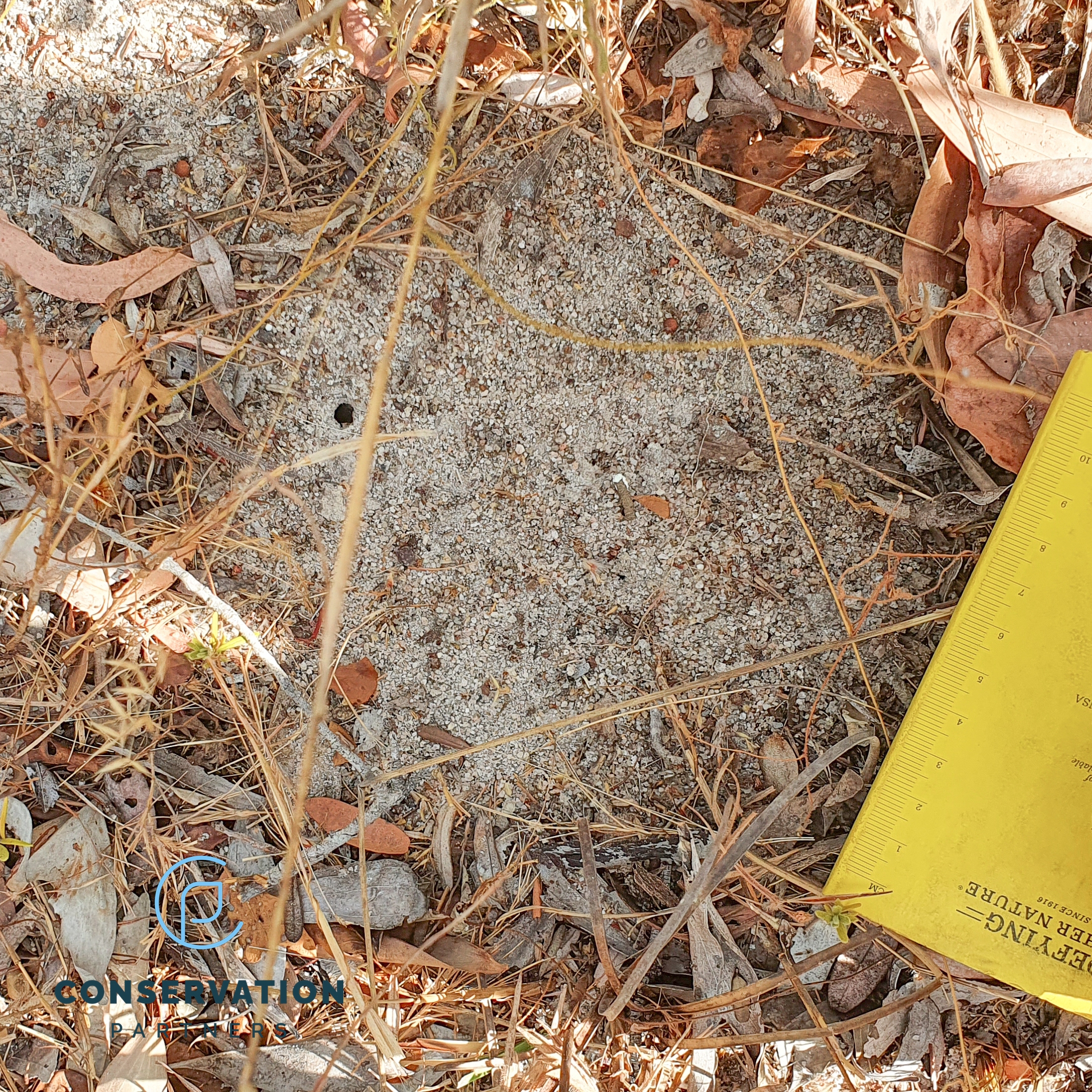
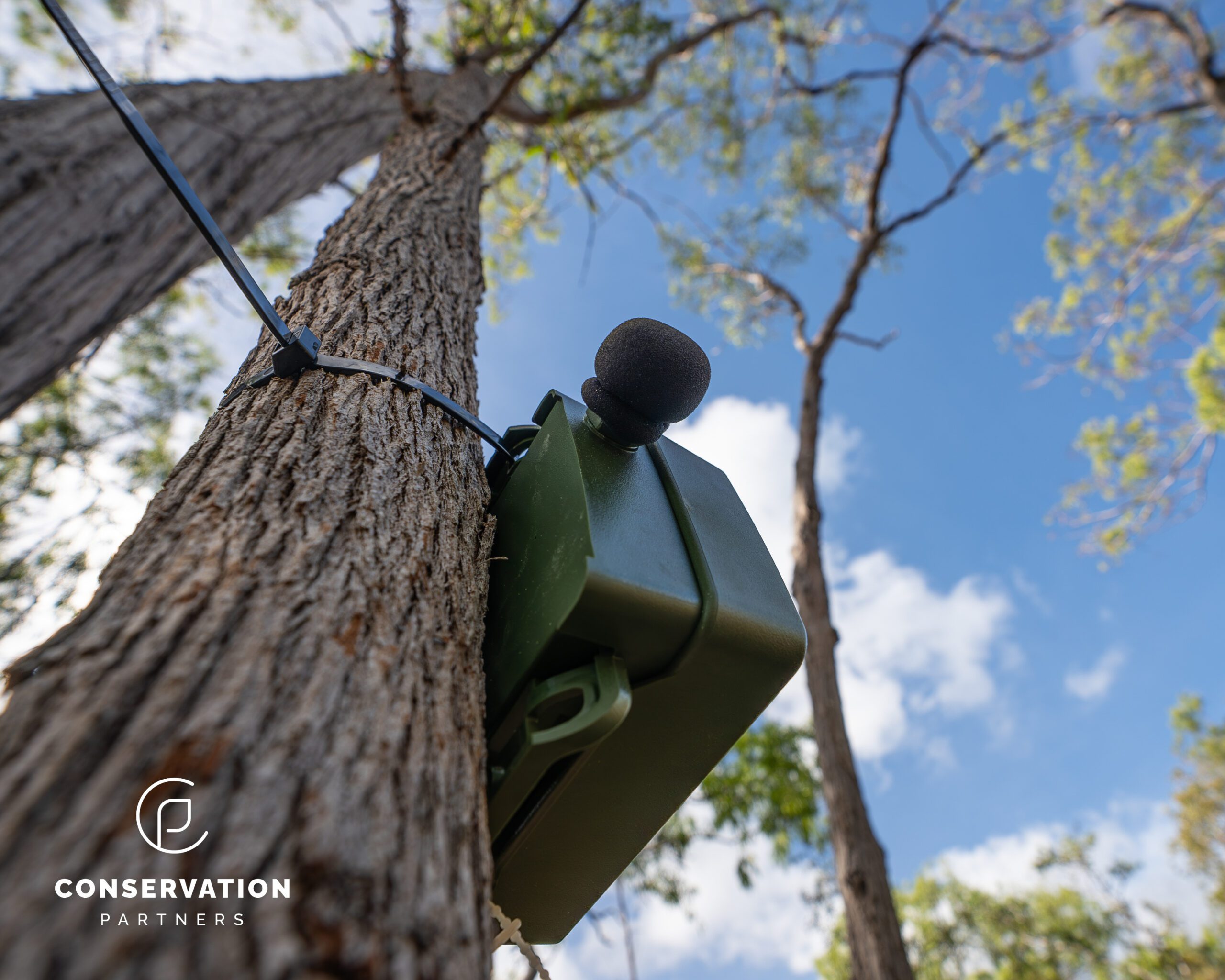
These signs confirmed that buttonquail were active in the area, so we set sound recorders on nearby trees to capture one hour of audio every morning and evening throughout the wet season, when the species is most likely to call. We also installed cameras in the most promising habitat to try to capture footage of the elusive bird.
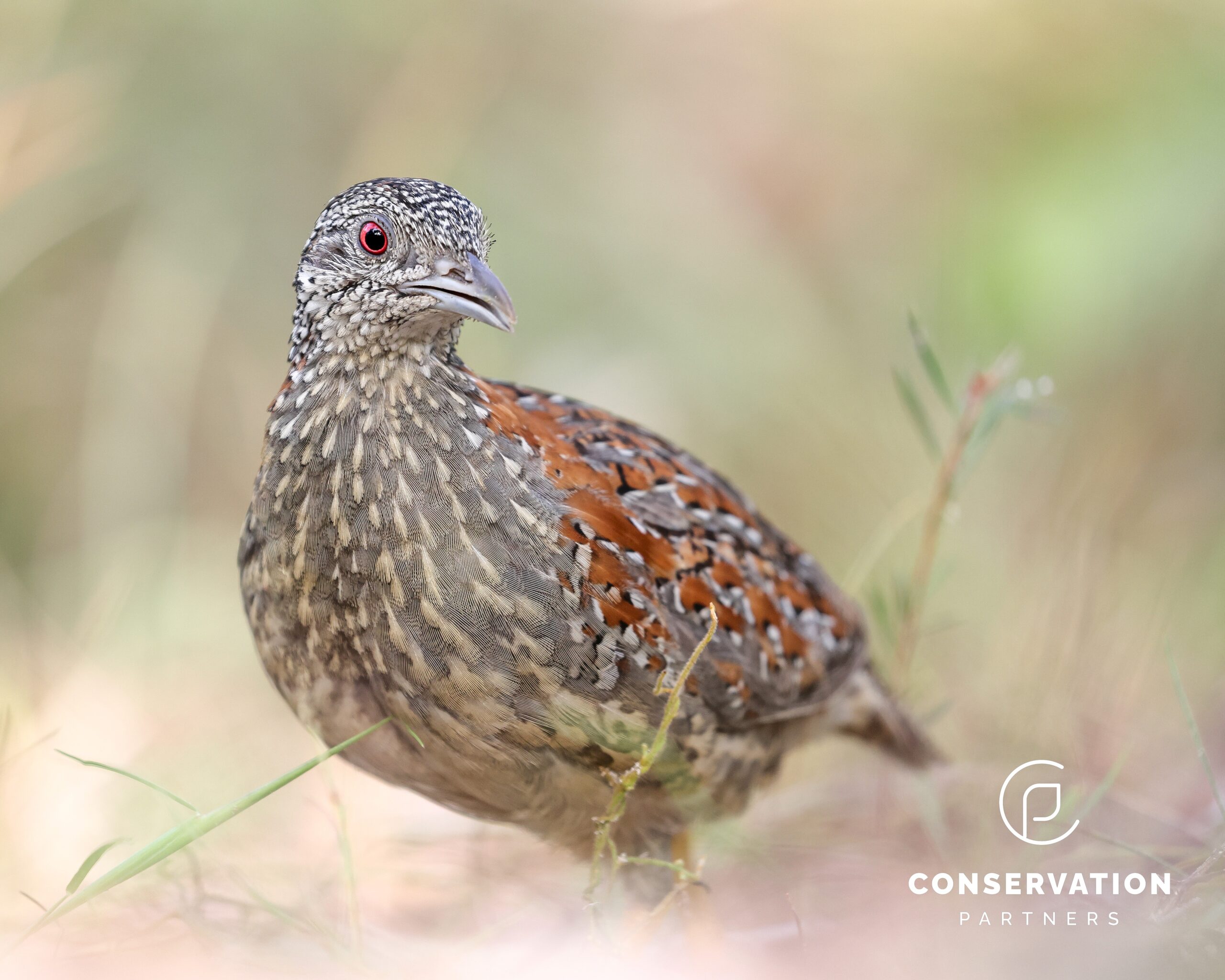
Despite the strong effort, no Buff-breasted Buttonquail were detected. However, the surveys were far from fruitless. We recorded Painted Buttonquail on central Cape York, approximately 200 km northwest of its previously recognised distribution. This new record places the species well north of Coen, which is also the last location where Buff-breasted Buttonquail were observed. This finding is important for how we understand buttonquail distribution on Cape York and how we interpret unconfirmed sightings of “large buttonquail” across the region.
After years of searching, we haven’t found any evidence that the BBBQ still exists, but we remain hopeful that they still occur at some places, many of which are managed by First Nations groups. We remain available for supporting further surveys that are coordinated by them.
The Buff-breasted Button-quail: Missing in Action.

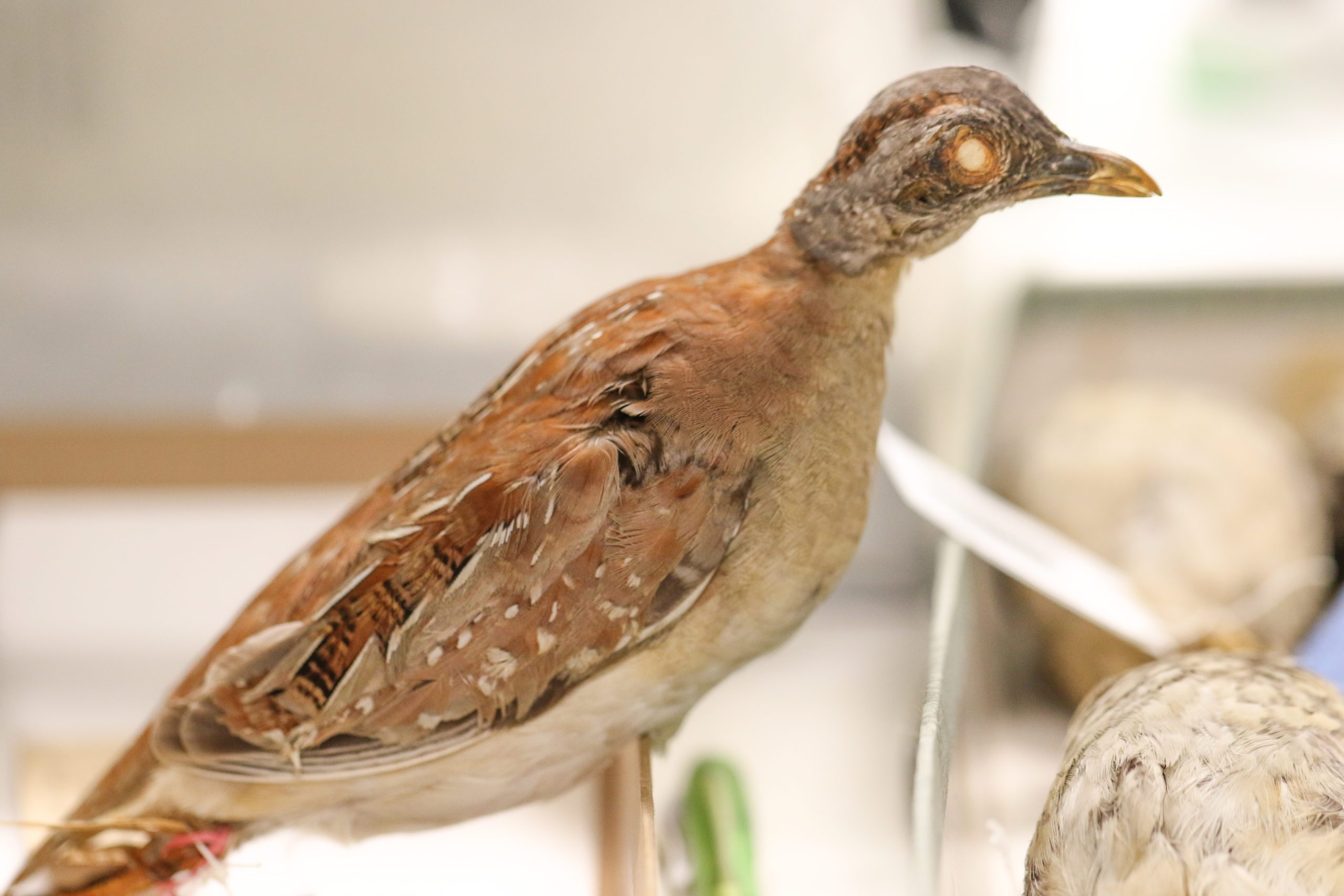
A BBBQ Skin collected by McLennan stored at Museum Victoria.
A BBBQ Skin collected by McLennan stored at Museum Victoria.
A BBBQ Skin collected by McLennan stored at Museum Victoria.
Platelet discovered while searching for the Buff-breasted Buttonquail. Photo credit - Patrick Webster.
Audio recorders were set up in search for the Buff-breasted Buttonquail. Photo credit - Patrick Webster.
The Painted Buttonquail. Photo credit - Patrick Webster.
OUR PARTNERS