
FREQUENTLY ASKED QUESTIONS
At Conservation Partners, we believe in being transparent about the work we do, the challenges we face, and the decisions we make to help protect Australia’s unique wildlife and ecosystems.
This page answers some of the most common questions we receive about our projects, conservation methods, and on-ground management practices. We know that not everyone will always agree with every approach, but we are committed to ensuring our work is guided by science, experience, animal welfare considerations, and long-term conservation outcomes.
LANDHOLDERS
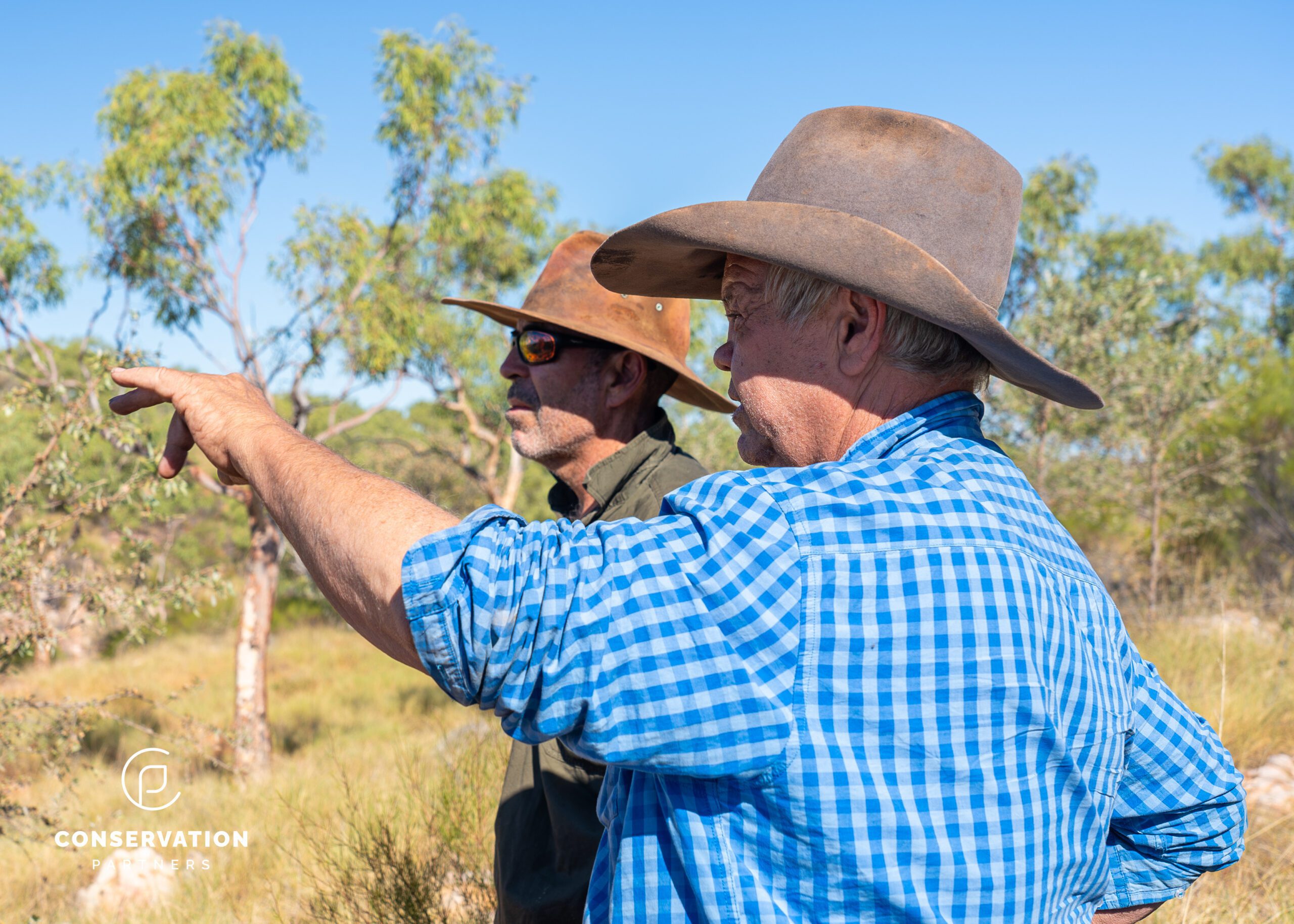
Q. Are the landholders employed as part of the conservation work?
A. Our work is built around partnerships with landholders who manage conservation areas on their own properties. While they are not employees, we do provide financial support to help cover out-of-pocket expenses and the ongoing maintenance required to manage these sites for conservation.
FERAL ANIMALS
Q. Do you need help with eradicating pigs on your land?
A. Many of the landholders we work with actively manage feral pigs and other invasive species on their properties. In some cases, landholders may allow experienced and trusted hunters to assist with control efforts. Access to properties is always at the discretion of the landholder, and opportunities are limited. Landholders generally only work with hunters they know or who come recommended and have appropriate experience and safety practices.
Q. Is there a cat control program in place on Chidna Station and Artemis Station?
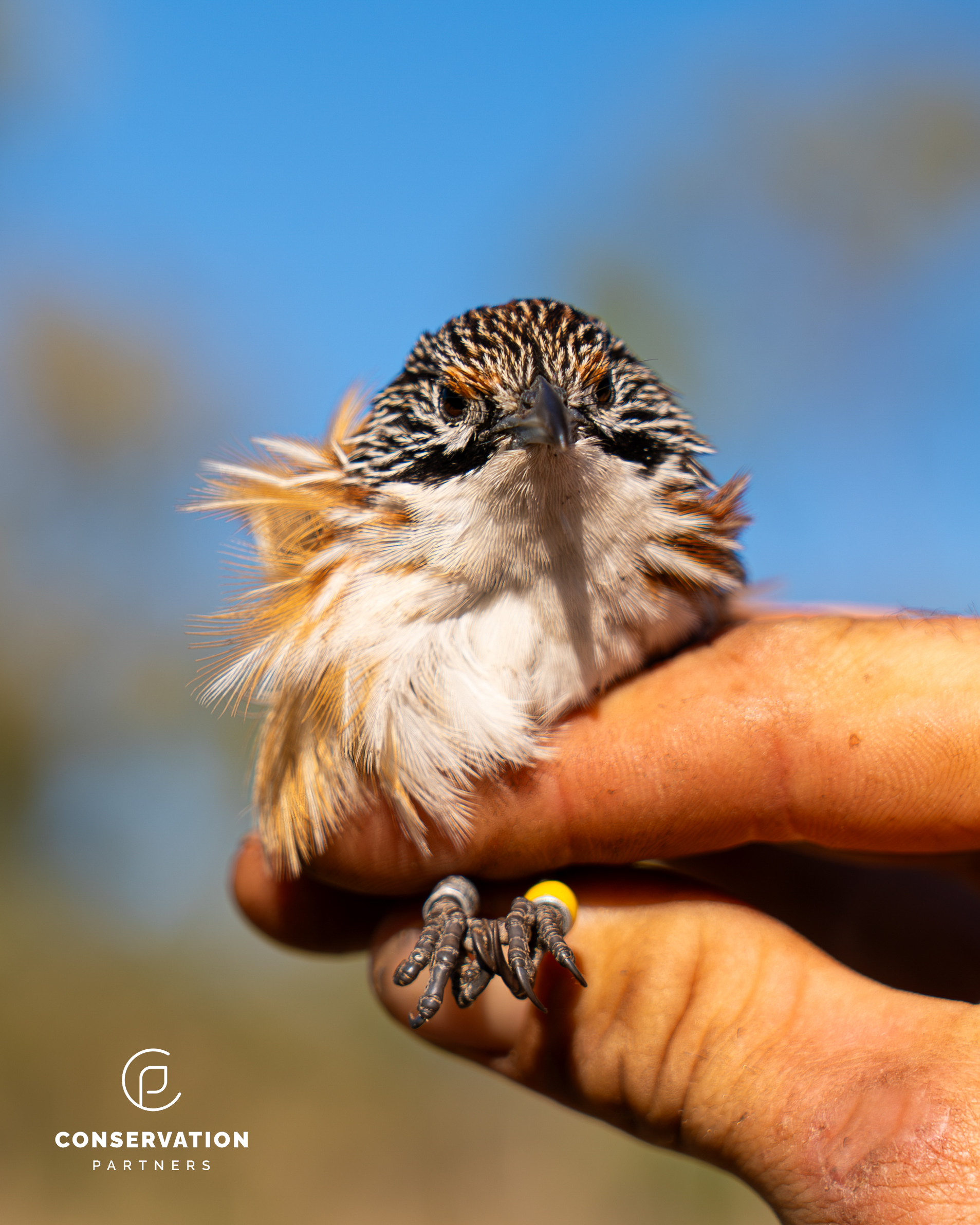
A. Feral cats are a significant threat to many native species, and we recognise the importance of managing their impacts. Unfortunately, there are no landscape-scale solutions to managing feral cats. But what we can do is control cats at locations with high densities of threatened species. At Artemis, we trap and shoot within Golden-shouldered Parrot nesting habitat, and at Chidna we do the same where there are high densities of Carpentarian Grasswrens.
Q. Wouldn’t bio-control with a disease help to eradicate the pests you’re dealing with?
A. While disease can reduce certain pest populations under certain circumstances, scientific research shows that relying on disease alone is rarely sufficient for eradication. Most wildlife and pest management programs use an integrated approach, combining trapping, shooting, poisoning (like 1080 in Australia/New Zealand), and habitat management. Also, there is no emerging opportunities for biocontrol of cats, and it is unlikely to be supported within the broader community.
Viral biocontrol: grand experiments in disease emergence and evolution (Trends in Microbiology)
PestSmart – Benefits of Rabbit Biocontrol in Australia
National Invasive Species Info Center – Integrated Pest Management Resources
Q. Do pigs cause any more damage than the feral horses?
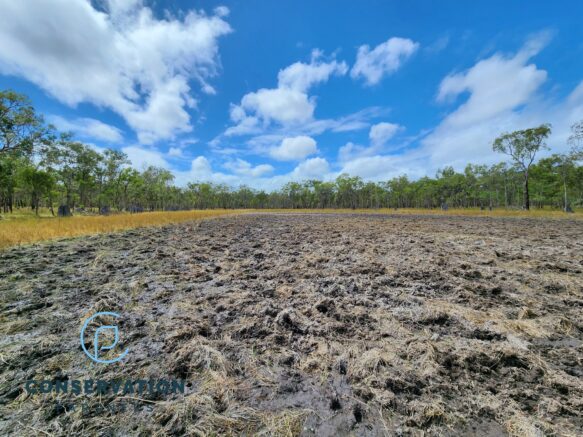
Fortunately, there are only small numbers of feral horses on Artemis, so the comparison isn’t relevant here. Feral pigs, however, are highly destructive, digging up soil, eating native plants, and threatening nests and other wildlife. Managing pig populations is an important part of protecting habitat and ensuring the survival of species like the Golden-shouldered Parrot.
Q. Where are the dingoes? Would they help control the pigs?
A. Dingoes are likely to impart some level of regulation on pigs, but they are unlikely to be a 100% solution to the problem. We also need to accept that dingoes do kill calves and damage adult cattle, and so we need to respect the wishes of the landholders where we work, that need to control dingoes from time to time.
Q. Do your staff always carry firearms with them so they can shoot feral animals whenever they see them?
A. Our staff do not carry guns on routine patrols because feral pig control is planned and carefully managed to ensure safety, effectiveness, and compliance with regulations. Pig control involves targeted operations, using approved techniques such as trapping and controlled culling in designated areas, rather than opportunistic shooting.
This approach ensures that pigs are managed safely and humanely, while protecting staff, wildlife, and the broader environment. You can read more about our feral animal management programs here.
Q. Why not allow recreational hunters do the work and put a bounty on wild pigs?
A. Bounties and open hunting rarely achieve eradication. Experience shows that animals often just get managed in ways that provide an ongoing monetary source, rather than removing populations entirely. Our goal is complete eradication of feral pigs, which is the only way to fully protect native species and habitat.
Additionally, allowing unrestricted hunting on private property can put livestock, fences, and gates at risk, and farmers understandably need to protect their stock and property. We work with landholders using strategic, safe, and effective control programs to manage pigs and restore habitat for species like the Golden-shouldered Parrot.
Q. Do you have to use 1080? It seems in-humane.
A. The scientific community does not dismiss welfare concerns. Several studies have evaluated the onset of symptoms and humane endpoints in affected animals. Acknowledging this, regulators and pest management programs work to optimize methods to minimize suffering while achieving management objectives. The decision to use 1080 in official pest control programs is based on balancing ecological harm from invasive pests against the potential welfare impacts of the control method. When invasive predators are left unchecked, they can cause severe declines or extinctions of native species. In many ecological impact studies, reducing pest numbers has been shown to allow native wildlife populations to recover.
Q. Is there a risk that GSPs eat the poison?
A. No. Before we apply 1080, we carefully monitor the area to ensure no non-target animals, including parrots, are feeding. We use pre-baiting and video footage over several days to confirm that only target species are taking the bait. This ensures the birds remain safe. We also monitor during the baiting period to assess what takes the baits.
Q. When the pigs eat the 1080 bait how long does it take for them to die?
A. The time from ingestion to death depends on body weight, species, and dosage. It can range from about 30 minutes to several days, with larger animals typically taking longer. While it is not instantaneous, the process is carefully monitored as part of our pig control programs.
Q. Do you clear the carcasses to prevent secondary poisoning to off-target species?
A. Yes. We remove carcasses the following morning wherever possible. Most wildlife is unlikely to feed on poisoned carcasses overnight, and the active ingredient in 1080 degrades relatively quickly in the presence of moisture. The risk of secondary poisoning to other animals is very low when standard safety protocols are followed.
Q. Can infertility treatments help as a solution to feral pig control?
A. While fertility control might prevent future piglets, it does not stop adult sows from digging, rooting, and damaging wetlands and native vegetation. Plus, it is not feasible to capture all pigs from the vast area of Artemis and surrounds. Our goal is significant suppression of feral pigs from critical habitats, because this is the only way to fully protect native species like the Golden-shouldered Parrot and maintain healthy ecosystems.
Q. Why not use sodium nitrate licking blocks to control pigs?
A. We have used sodium nitrite at Artemis with mixed results. Thanks to our intensive monitoring using camera traps, we can prove that the same pigs often repeatedly ingest sodium nitrite baits and do not die. We suspect that the baits degrade quickly in storage and lose their efficacy.
Q. Can you use the meat for pet food/human consumption?
A. Artemis is in a remote area and the economics of establishing an industry around feral pig meat is unlikely to stack up. Feral pigs in Australia are also known carriers of several diseases, some of which are significant concerns for livestock, wildlife, and occasionally humans. There are easier places for a market to source wild pig meat in Queensland, although it is likely to be used for pet food rather than human consumption.
Q. Are there better methods for pig control that you haven’t thought of?
A. We use methods that are safe, legal, and effective for feral pig control. Remote shooting or improvised traps can be dangerous for staff, livestock, and wildlife, and may violate regulations. Our pig control programs rely on approved techniques, including targeted baiting, trapping, and monitoring, designed to minimise risk to non-target animals and people while ensuring eradication of pigs from critical habitats. Additionally, trapped wild pigs often react badly when approached by a shooter, causing significant injury before death, thus raising other animal welfare concerns.
Q. Can you use robotics and drones that recognise them and eliminate the pigs?
A. Technology like drones and robotics is being explored for feral pig control, but it is not yet a practical solution at scale. Current approaches rely on targeted baiting, trapping, and monitoring, which are proven, safe, and effective for reducing pig populations while protecting native wildlife. Drones may help with surveying and locating pigs, but the actual removal of pigs still requires approved and carefully managed control methods.
BUFF-BREASTED BUTTON QUAIL
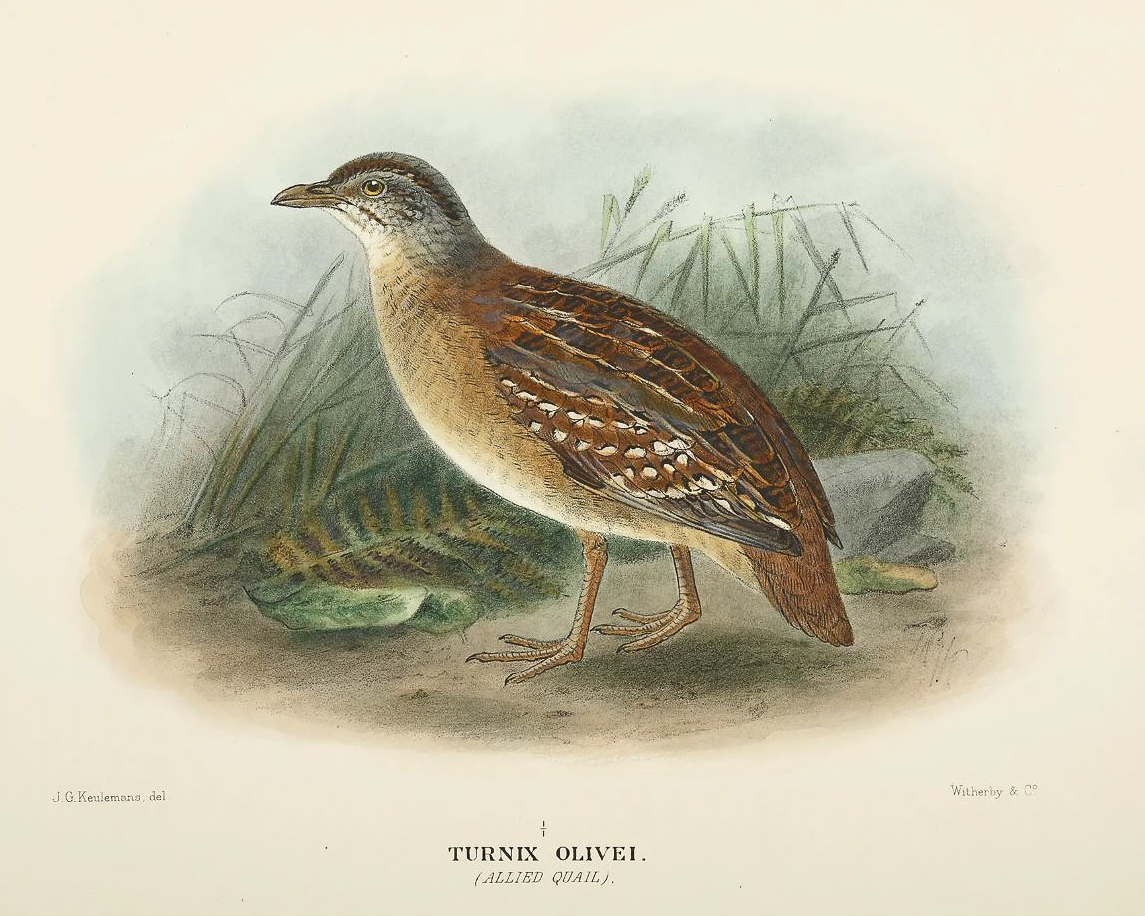
Q: Are you still working on the BBBQ project?
A: The species has proven elusive, and confirming sightings is challenging. Researchers use careful surveys, camera traps, and habitat monitoring to document any remaining populations. The goal is to protect and restore habitat, giving the Buff-breasted Button-quail the best chance of survival, rather than assuming it never existed. The Buff-breasted Button-quail remains an important species in our work. Our role is to support First Nations’ efforts to locate remnant populations, who control much of the likely habitat remaining for this species. Check out our BBBQ page here to learn about the species.
CHIDNA STATION
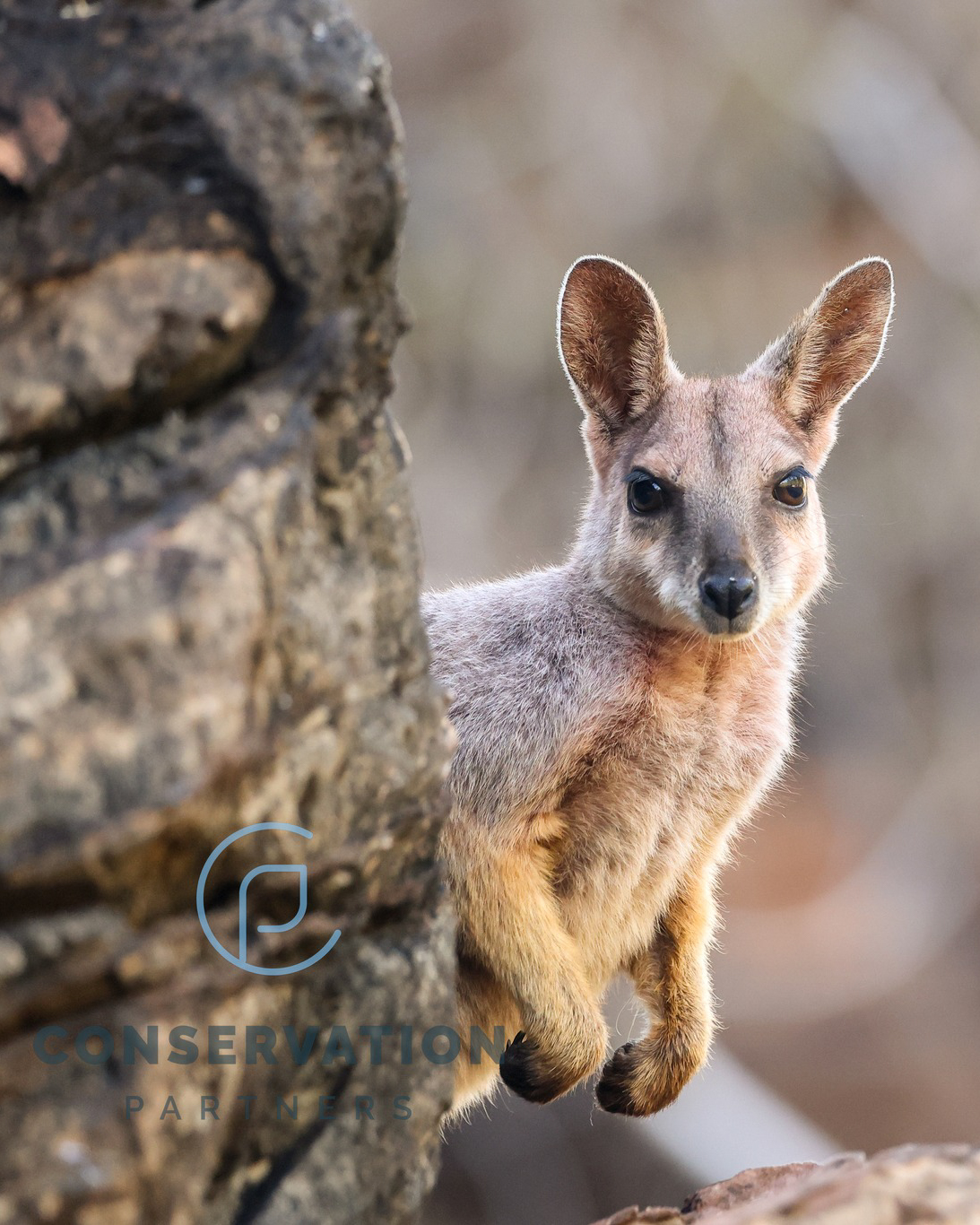
Q. Aren’t Purple Necked Rock Wallabies one of the most abundant and locally widespread rock wallabies?
A. Purple-necked Rock-wallabies can appear locally common in some areas, particularly in the northern parts of their range. However, they have all but disappeared from southern sections of their range around Winton. The cause of their disappearance is not entirely clear, but may relate to predation feral cats and foxes, and competition from introduced herbivores.
ARTEMIS STATION
Q. Why do you chop so many trees down?
A. We appreciate that seeing trees removed can be upsetting and counter intuitive. Trees are iconic and valuable in their own right. Our work isn’t about clear felling forests. Rather, we use targeted vegetation management as part of broader ecological restoration programs that help protect threatened species and restore landscapes where they’ve become degraded or unbalanced.
Many Australian ecosystems evolved with fire, grazing and open woodlands, and when vegetation becomes overgrown, invasive, or out of place, it can actually harm priority species. For example, on projects such as the habitat restoration work at Artemis Station, our teams have carefully removed invading trees and shrubs that were outcompeting native grasses and nesting habitat for endangered parrots. Because these trees were technically native but not part of the historical habitat structure, their removal was necessary to restore ecological function and was carried out under permits and with careful methods to minimise impact (e.g., hand cutting in sensitive areas).
Our approach is grounded in:
• science based planning to understand how particular vegetation changes affect threatened wildlife and ecosystems;
• collaboration with landholders, custodians and managers so actions fit long term land use and conservation goals; and
• careful monitoring and follow up to ensure that the work we do leads to stronger, healthier habitat over time.
The trees we remove are not taken down indiscriminately. They are part of ecological restoration efforts that help native plants and animals thrive in places where the natural balance has been disrupted. That’s very different from broad scale clearing for development or agriculture and we spend a lot of time planning, justifying and monitoring every action we take so that it delivers net positive outcomes for biodiversity.
Q. Why did you accept the assistance of Rio Tinto? Was it crucial to secure the seed, or could you have obtained it without their contribution?
A. Our mission is to protect and restore Australia’s threatened species and habitats. We are a not-for-profit organisation, and much of the work we do depends on collaboration with partners who can provide the resources and logistical support needed to achieve conservation outcomes at scale.
In this case, Rio Tinto’s assistance enabled us to secure the seed efficiently and responsibly, supporting the long-term restoration of critical habitats. While we pursue all avenues to carry out our conservation work, partnerships with organisations that share our commitment allow us to achieve results faster, more sustainably, and at lower cost, without compromising our independence or mission.
We are grateful for this support, which helps turn our conservation plans into real, on-the-ground outcomes for native species.
Q. Why not remove grazing competition from the property completely?
A. It’s important to remember that farmers are essential to the community and the landscape. Our approach is to work alongside farmers to manage grazing in ways that support both productive land use and the conservation of threatened species like the Golden-shouldered Parrot (GSP).
Rather than stopping farming altogether, we aim for collaborative solutions that balance the needs of wildlife with the livelihoods of local families — because healthy ecosystems and sustainable farming can coexist.
Q. What if the property gets sold on to another owner who doesn’t have the same values for these precious birds?
A. We share the same concern. We are working closely with the landowners to put agreements in place that help ensure the property continues to provide a safe and protected habitat for the Golden-shouldered Parrots, even if ownership changes in the future. Our goal is to safeguard these birds long-term through collaboration, conservation planning, and legal protections.
Q. Wouldn’t regenerative grazing with cattle be best practice to support the native grasses?
A. We work collaboratively with farmers to manage grazing in ways that support both productive cattle operations and native habitat for species like the Golden-shouldered Parrot.
While we do not dictate specific grazing methods, our programs focus on:
• Maintaining open vegetation around nests for safety and foraging,
• Protecting key native grasses and plants, and
• Collaborating with landholders to implement sustainable land management practices that benefit both wildlife and farming.
This partnership approach ensures that birds and cattle can coexist, and that native ecosystems are supported while farms remain productive.
Q. Can't habitat be made wider and further in other properties?
A. Expanding habitat is always a goal, and many landholders do want to support Golden-shouldered Parrots. However, creating suitable habitat is not as simple as managing threats or providing food. These parrots require specific nesting mounds, foraging areas, and vegetation, as well as protection from over abundant native predators. We work collaboratively with willing landowners to restore and manage habitat, but it requires planning, resources, and ongoing management to ensure the parrots can survive and breed successfully.
By focusing on carefully selected sites and working with committed landholders, we can expand safe and sustainable habitat over time, giving these parrots the best chance to thrive in the wild. There are Golden-shouldered Parrots found on other properties in relatively close proximity to Artemis Station.
Q. Can you use grazing alone instead of fire? I’m concerned about the impact of fire on native animals.
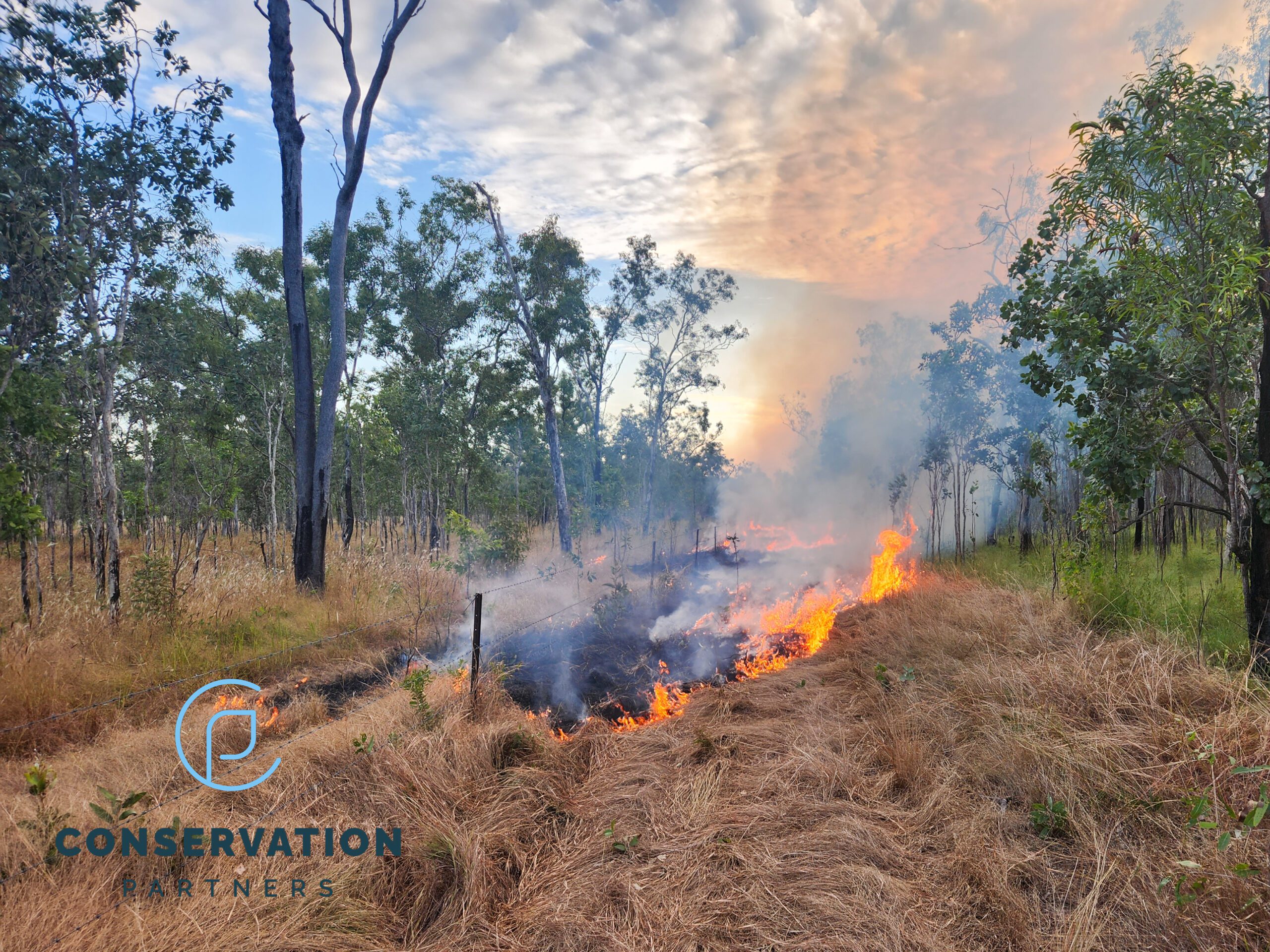
A. Fire is indeed a tool that must be used carefully, but it plays an important role in managing woody regrowth. Over time, the once-open savannahs where Golden-shouldered Parrots live can become thick and overgrown, which reduces nesting and foraging opportunities, and increases predation pressure. Carefully planned burns help restore open habitat structure, improving survival for the parrots and other native species.
We combine fire with grazing and other management strategies to balance the needs of wildlife and the ecosystem. You can see more about how fire is used responsibly in habitat management in this video on carbon and savannah management.
GOLDEN-SHOULDERED PARROTS
Q. Could these parrots be bred in captivity?
A. Our focus is on protecting them in their natural habitat, restoring ecosystems, and ensuring their survival in the wild. We do not remove these birds from the wild. GSPs are legally protected and listed as endangered, which means keeping them requires a special licence. Even licensed keepers must comply with strict record-keeping and breeding requirements under state and federal law. Because of this, they are held by only a small number of specialist aviculturists, mostly in Queensland. They are not a bird you'd find at a typical bird fair or pet shop. Several aviculturists experienced in keeping GSPs have provided important advice to us over the years, including the optimal seed mix to use at supplementary feed stations.
Q. Do you use captive bred birds in your videos and social media?
A. We do not breed any Golden-shouldered Parrots (GSP) in captivity. All of the birds featured on our website and social media are wild birds, unless we are clearly sharing images provided by others of captive-bred individuals. Our work focuses on protecting and restoring wild populations in their natural habitat.
Q. Is the electric fence any danger to the birds?
A. No. For an animal to get an electric shock they need to be “earthed” and touch the positive or active circuit. Adult parrots fly over the fences and so never get earthed. Even if they landed on the wire, they would not get a shock. We use carefully designed electric fencing only as a temporary, targeted protection measure around active nests to keep predators away while the chicks are vulnerable. These systems deliver a brief, harmless shock that deters animals from entering the area without causing injury.
This approach has been part of our nest protection work on the Artemis project, and has more than doubled nest success.
Q. Are you sure male birds have one partner/nest per season or could he have more than one nest on the go at once?
A. Based on our long-term observations of Golden-shouldered Parrots, males are generally faithful to a single female during the breeding season. Pairs are consistently seen foraging together and taking turns feeding their chicks. We do sometimes see interloping males visiting nests, which usually results in a skirmish. We’re not sure what the reasons are for these visits, but it could relate to extra-pair paternity. Resolving this would require significant investment in research, including expensive genetic tools to determine relatedness between adults attending, offspring and other adults in the area. This kind of work is beyond the scope of what we’re focussed on.
Q. Do the leg bands cause problems?
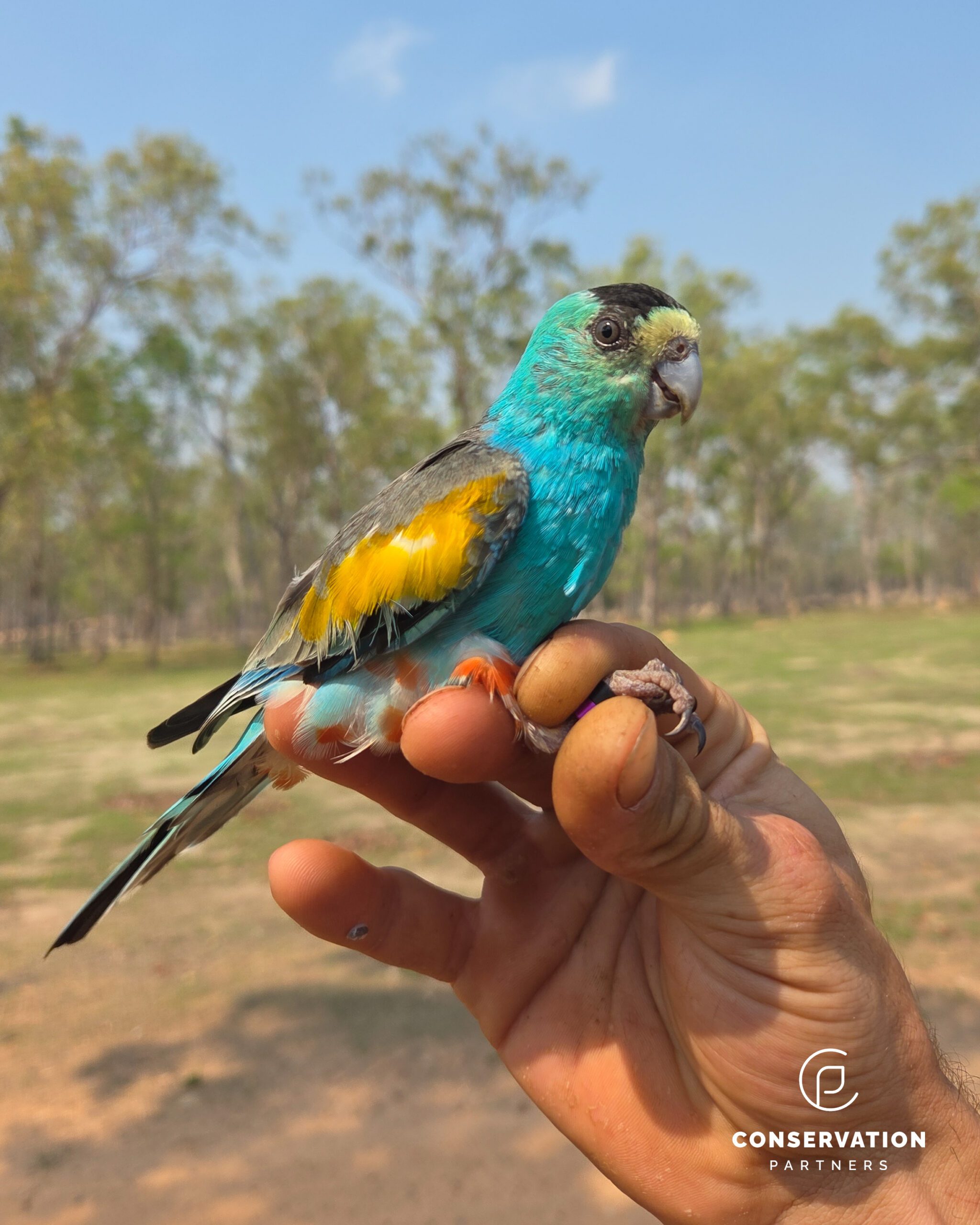
A. The welfare of the birds is always our highest priority. Banding does involve some level of risk, but this is mitigated by using only licenced banders and the approved band size for this species. We also only use one band per leg, which further reduces risk. Banding is absolutely essential to ensure our management strategies are having the desired impact. The key metric we are interested in is individual survival, which we expect to increase through time. Since 2020, we have more or less continuously monitored banded birds using cameras at feeding stations, and we have never observed any leg injuries.
Q. Is coring out new nesting holes into mounds done to artificially create nest holes?
A. No. There’s no need to artificially create nest holes. Golden-shouldered Parrots naturally burrow into termite mounds. Any unused holes are typically covered by termites, so coring or creating holes is unnecessary.
Q. Is it true that they utilise Kingfisher burrows?
A. No. Golden-shouldered Parrots do not use Kingfisher burrows. They construct their own cavities inside termite mounds for nesting, which provide the specific soil structure, depth, and microclimate needed for egg-laying and chick survival.
Q. Food appears to be everywhere. Isn’t it just water they need?
A. While it might seem like food is abundant, naturally occurring seed is in short supply. This is especially evident in the wet season. Grazing pressure has caused the decline in key wet season perennial grasses such as Cockatoo Grass and Perennial Sorghum. The feeders we provide ensure that birds have reliable nutrition throughout the year, supporting their survival, breeding success, and overall health.
Q. Is there a building plan for the feeders?
A. Supplement feeding for conservation purposes needs to be monitored and only used when there are known benefits. These feeders have been designed and built specifically for GSPs at Artemis and are closely monitored.
ANTBED PARROT MOTH
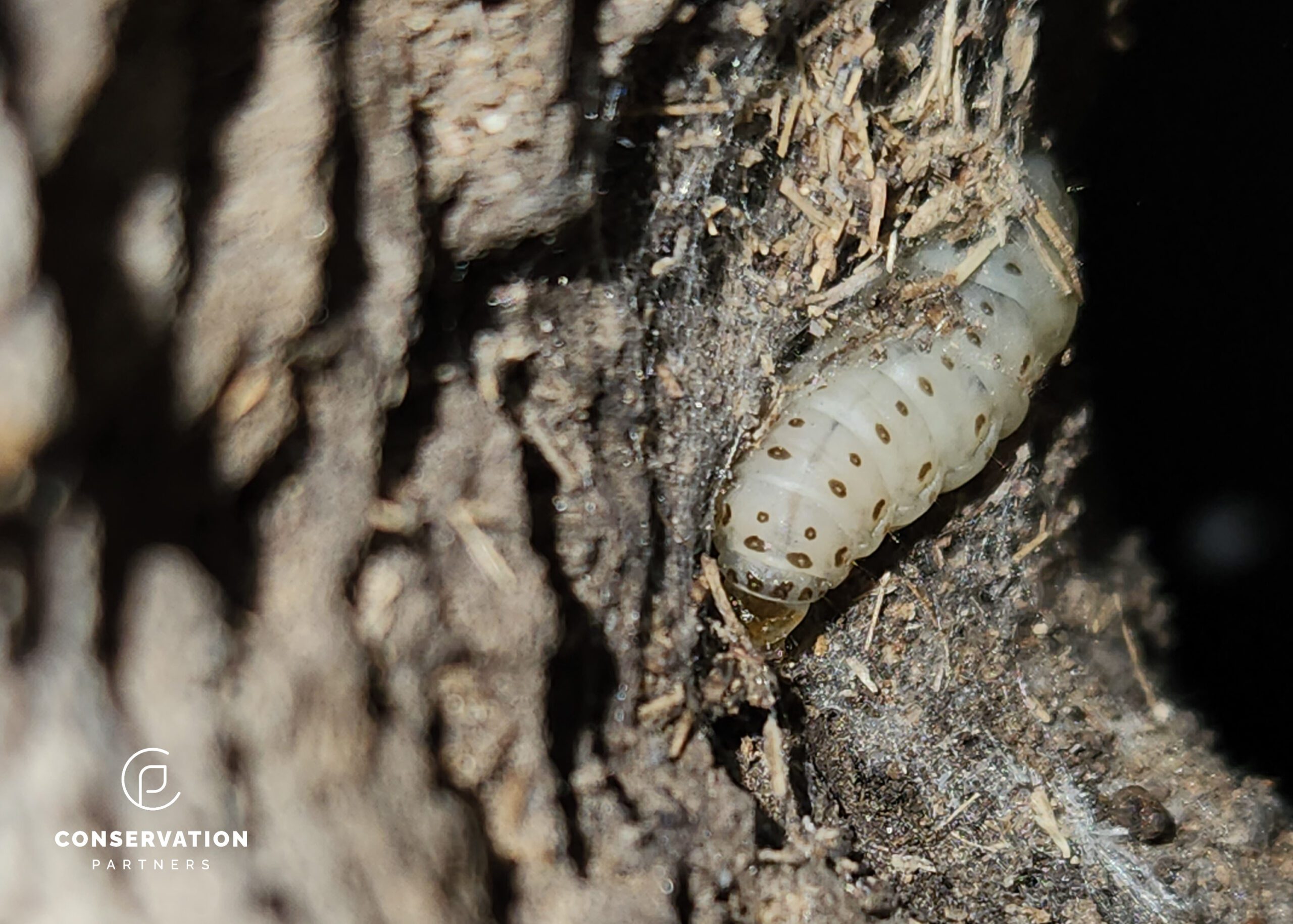
Q. I saw a Parrot Moth larva latched to a chick’s feather. They do no harm to the parrots?
A. The Antbed Parrot Moth larvae do no harm at all to the chicks or adult parrots. They may occasionally cling to feathers, but this is harmless.
Q. What do the Parrot Moth caterpillars feed on?
A. Antbed Parrot Moth caterpillars feed on parrot droppings in the nesting mounds. They play a natural role in the ecosystem by recycling nutrients and keeping the nest clean.
Q. If the GSPs become extinct will the Antbed Parrot Moth also disappear?
A. Yes, the Antbed Parrot Moth is also endangered. It is completely dependent on the parrots, so if we lose the parrots, we will lose the moth too. Interestingly, it is likely that the now extinct (and related) Paradise Parrot also had its own specific moth, that is now extinct too.
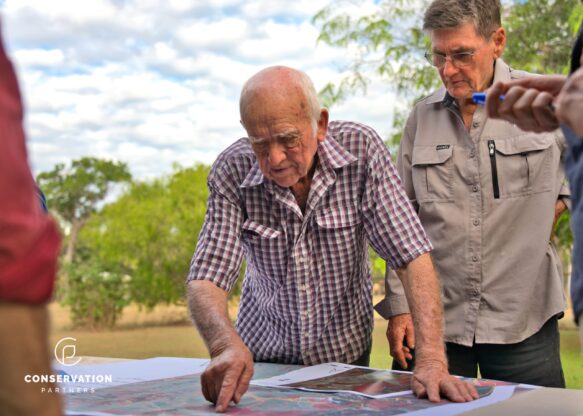
Landowners on Chidna Station (Brussie Spreadborough) and Artemis Station (Tom and Sue Shephard). Photo Credit - Braydon Maloney.
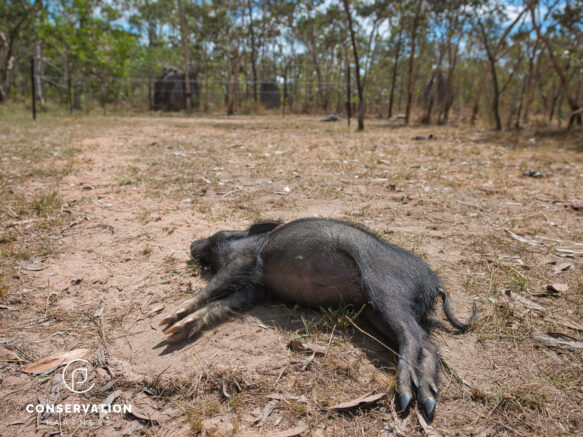
Feral pigs cause extensive damage on Artemis Station. We remove feral pigs. Photo credit to Braydon Moloney.
Buff-breasted Button-Quail illustration from 1922. There are no photos of the BBBQ in existence.
Carpentarian Grasswren - Photo Credit to Braydon Moloney. Purple-necked Rock Wallaby on Chidna Station.
Fire in action on Artemis Station - Photo Credit to Braydon Moloney.
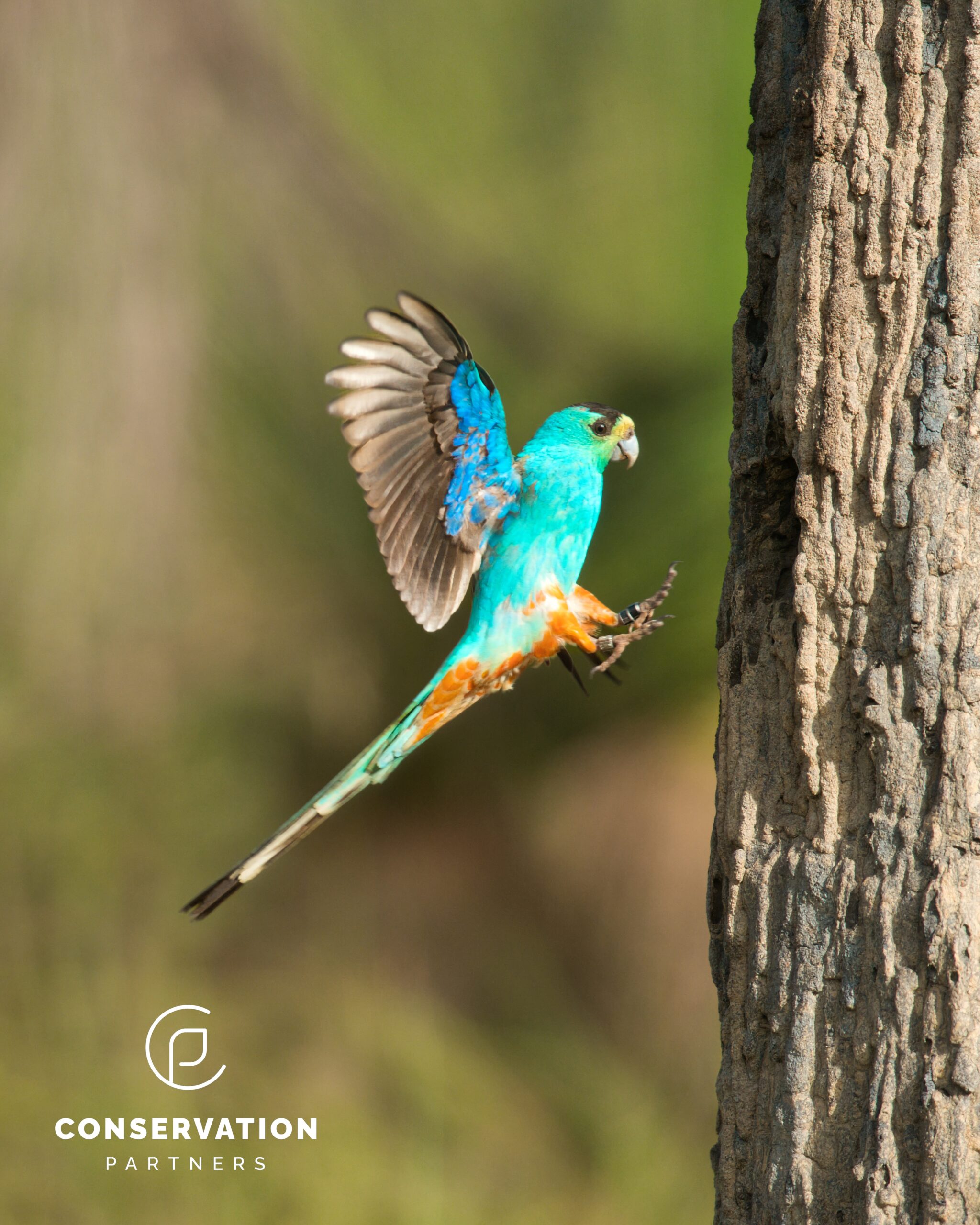
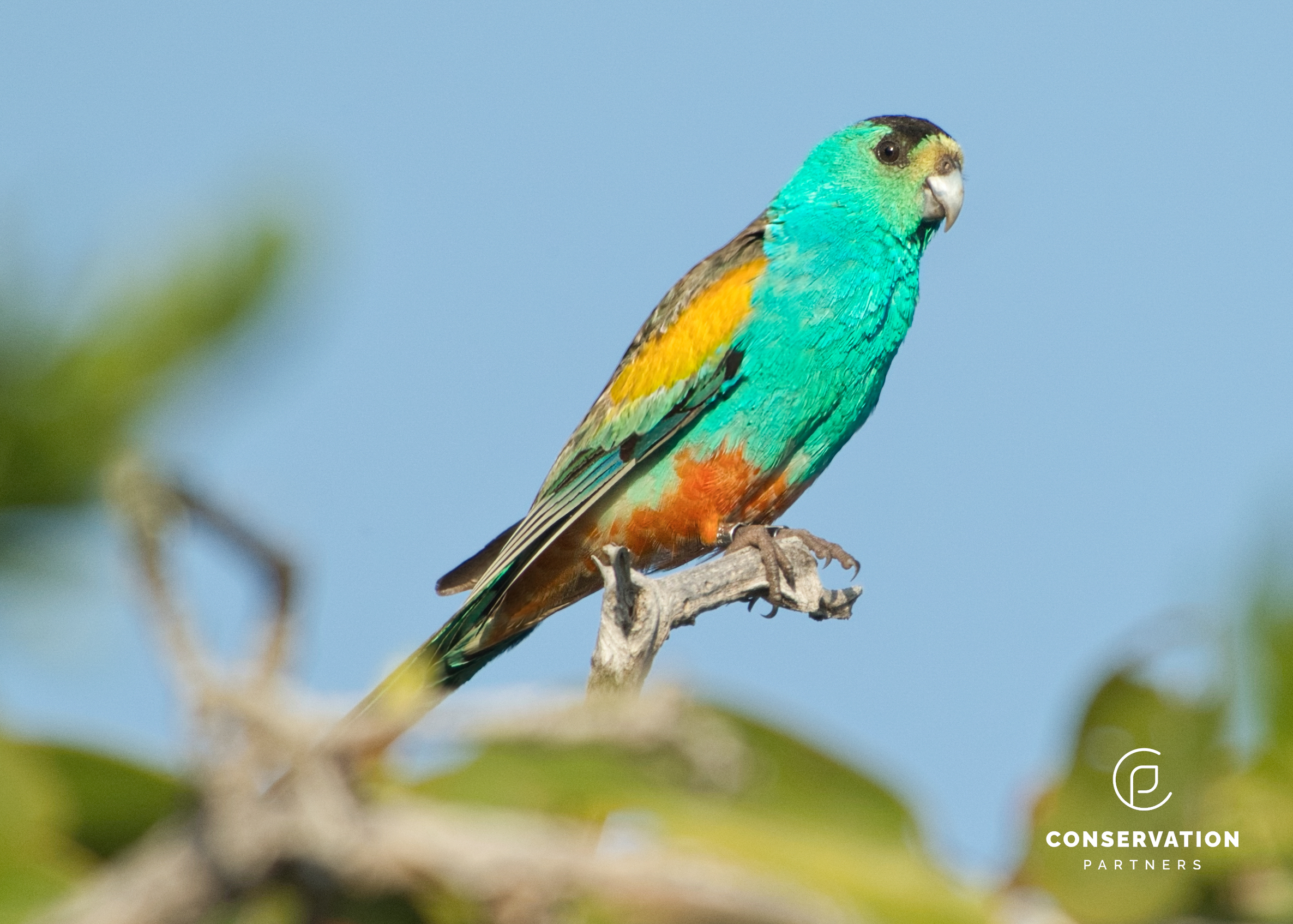
Golden-shoulderd Parrot (left) Photo Credit to Braydon Moloney (right) Photo Credit to Patrick Webster.
Golden-shoulderd Parrot (left) - Photo Credit to Braydon Moloney. Ant bed Moth (right) - Photo Credit to Patrick Webster.
Chidna Station. Photo Credit to Braydon Maloney.
Footage at Chidna Station. Photo Credit to Braydon Maloney.